Key Takeaways
- Hair loss is a common and distressing condition with numerous potential underlying causes, many of which can be identified through specific blood tests.
- Nutritional deficiencies (iron, vitamin D, zinc, B12), hormonal imbalances (thyroid, androgens, prolactin), and inflammatory markers are key areas to investigate.
- TrueLabs offers comprehensive at-home blood testing for over 542 biomarkers, allowing for a thorough investigation into the root cause of hair loss.
- All TrueLabs results are medically reviewed by a licensed physician, entered into your personal medical EHR, and can lead to physician-prescribed treatment plans.
- Understanding the specific cause of hair loss is crucial for effective, targeted treatment and preventing further progression.
Hair loss can be a deeply distressing experience, often leaving individuals searching for answers. While genetics play a significant role in conditions like androgenetic alopecia, many other forms of hair loss, such as telogen effluvium or alopecia areata, stem from underlying health issues. The good news? Many of these underlying causes can be pinpointed through a targeted blood test hair loss cause investigation.
At TrueLabs, we understand the complexity of hair loss. We believe in an evidence-based approach, utilizing advanced diagnostics to uncover the true reasons behind your hair thinning or shedding. Our physician-led medical group is dedicated to providing comprehensive insights, ensuring that every patient receives a thorough evaluation and personalized care plan.
Why a Blood Test is Crucial for Hair Loss Diagnosis
Just as a detective gathers clues, a comprehensive blood test hair loss cause analysis provides vital information about your internal health. Hair follicles are highly sensitive to changes within the body, making them excellent indicators of systemic issues. Nutritional deficiencies, hormonal fluctuations, autoimmune conditions, and chronic inflammation can all manifest as hair loss. Without identifying these root causes, treatment efforts may be ineffective or misdirected.
Many individuals try countless over-the-counter remedies without success because they haven't addressed the fundamental problem. A targeted blood panel can save time, money, and emotional distress by guiding you toward the most appropriate interventions. Our board-certified physicians review every result, ensuring that no stone is left unturned in your diagnostic journey.
Key Blood Tests for Identifying Hair Loss Causes
When investigating hair loss, we focus on several critical areas that frequently contribute to the problem. These include nutritional status, hormonal balance, and inflammatory markers.
H3: Nutritional Deficiencies: Fueling Healthy Hair Growth
Your hair, like every other part of your body, requires a steady supply of essential nutrients to grow strong and healthy. Deficiencies in certain vitamins and minerals are incredibly common and often overlooked causes of hair loss.
-
Iron and Ferritin: Iron deficiency is one of the most prevalent causes of hair loss, particularly in women. Iron is crucial for red blood cell production, which carries oxygen to hair follicles. Ferritin is the stored form of iron, and low ferritin levels (even if hemoglobin is normal) can indicate depleted iron stores leading to increased hair shedding. Studies have shown that ferritin levels below 30 ng/mL are often associated with telogen effluvium. We recommend testing Iron, Total Iron Binding Capacity (TIBC), and Ferritin [blocked] to get a complete picture.
-
Vitamin D: Often referred to as the 'sunshine vitamin,' Vitamin D plays a vital role in hair follicle cycling and growth. Research suggests a strong correlation between low Vitamin D levels and various forms of hair loss, including telogen effluvium and alopecia areata. A 2014 study published in the International Journal of Trichology found that women with telogen effluvium had significantly lower serum vitamin D levels compared to healthy controls. We include Vitamin D (25-Hydroxy) [blocked] in our comprehensive panels.
-
Zinc: This essential trace mineral is involved in numerous bodily functions, including protein synthesis and cell division, both critical for hair growth. Zinc deficiency can lead to hair thinning and even alopecia. It also plays a role in regulating hormone levels, which can indirectly impact hair health. Our micronutrient panels [blocked] assess zinc status.
-
Vitamin B12 (Cobalamin) and Folate: These B vitamins are essential for red blood cell formation and DNA synthesis, processes vital for rapidly dividing hair follicle cells. Deficiencies can lead to anemia and, consequently, hair loss. We test for Vitamin B12 and Folate [blocked] to ensure optimal levels.
-
Biotin: While often marketed as a 'hair growth vitamin,' severe biotin deficiency is rare and usually only seen in specific genetic conditions or prolonged malnutrition. However, some individuals may benefit from supplementation if a deficiency is identified. We can assess Biotin levels [blocked] as part of a broader nutritional evaluation.
H3: Hormonal Imbalances: The Endocrine Connection to Hair Loss
Hormones act as messengers throughout your body, and imbalances can have a profound impact on hair growth and retention. This is a critical area for any blood test hair loss cause investigation.
-
Thyroid Hormones (TSH, Free T3, Free T4): Both an underactive (hypothyroidism) and overactive (hyperthyroidism) thyroid can cause significant hair loss. Thyroid hormones regulate metabolism, and when they are out of balance, hair follicles can enter a resting phase prematurely, leading to diffuse shedding. Hypothyroidism is a very common cause of hair loss, and a comprehensive thyroid panel [blocked] is essential. We check TSH, Free T3, and Free T4 [blocked] to get a complete picture of thyroid function.
-
Androgens (Testosterone, DHEA-S, DHT): While often associated with male pattern baldness, elevated androgens in women can also lead to hair thinning, particularly in conditions like Polycystic Ovary Syndrome (PCOS). Dihydrotestosterone (DHT), a potent androgen, is a key driver of androgenetic alopecia. We can assess Testosterone (Total and Free), DHEA-S, and DHT [blocked] to evaluate androgen levels.
-
Estrogen and Progesterone: Fluctuations in these female hormones, such as during pregnancy, postpartum, or menopause, can significantly impact hair cycles. While not directly causing hair loss in the same way as androgens, imbalances can contribute to telogen effluvium. We can include Estrogen and Progesterone [blocked] in a broader hormonal panel.
-
Prolactin: Elevated prolactin levels (hyperprolactinemia) can sometimes be associated with hair loss, though it's less common than thyroid or androgen issues. We can test Prolactin [blocked] if clinically indicated.
H3: Inflammatory and Autoimmune Markers
Inflammation and autoimmune conditions can directly attack hair follicles, leading to various forms of alopecia.
-
C-Reactive Protein (CRP) and Erythrocyte Sedimentation Rate (ESR): These are general markers of inflammation in the body. While not specific to hair loss, elevated levels can indicate an underlying inflammatory process that might be contributing to hair shedding, such as in certain autoimmune conditions or chronic stress. We include CRP and ESR [blocked] in our comprehensive inflammatory markers.
-
Antinuclear Antibodies (ANA): A positive ANA test can suggest an autoimmune condition, such as lupus, which can cause scarring alopecia or diffuse hair loss. If ANA is positive, further specific antibody testing may be warranted. We offer ANA testing [blocked] as part of our autoimmune panels.
-
Insulin and Glucose: Insulin resistance, often associated with type 2 diabetes, can indirectly contribute to hair loss by affecting hormone balance and inflammation. We test for Fasting Glucose and Insulin [blocked] to assess metabolic health.
The TrueLabs Advantage: Comprehensive At-Home Testing
Understanding the blood test hair loss cause is the first step towards effective treatment. At TrueLabs, we make this process convenient, comprehensive, and clinically sound.
-
At-Home Convenience: No more waiting rooms or inconvenient appointments. Our kits are delivered directly to your door, allowing you to collect your samples discreetly and on your schedule. Learn more about how it works [blocked].
-
Extensive Biomarker Analysis: We go beyond basic panels. With access to over 542 biomarkers, we can delve deep into your physiology to uncover even subtle imbalances that might be contributing to your hair loss. Our approach is rooted in cutting-edge science [blocked].
-
Physician-Led Expertise: TrueLabs is a physician-led medical group, not just a lab company. This means every test result is medically reviewed by a licensed physician. Our board-certified physicians interpret your data, connecting the dots between your symptoms and your lab values.
-
Personalized Treatment Plans: Based on your unique results, our licensed providers can prescribe targeted treatments in all 50 states. This might include specific nutritional supplements, hormone therapy, or referrals to specialists, all designed to address the root cause of your hair loss. Explore our treatment options [blocked].
-
Integrated Medical Record: All results are entered into your personal medical EHR (Electronic Health Record). This ensures continuity of care, easy access to your health data, and seamless communication with other healthcare providers.
What to Expect After Your Blood Test Hair Loss Cause Results
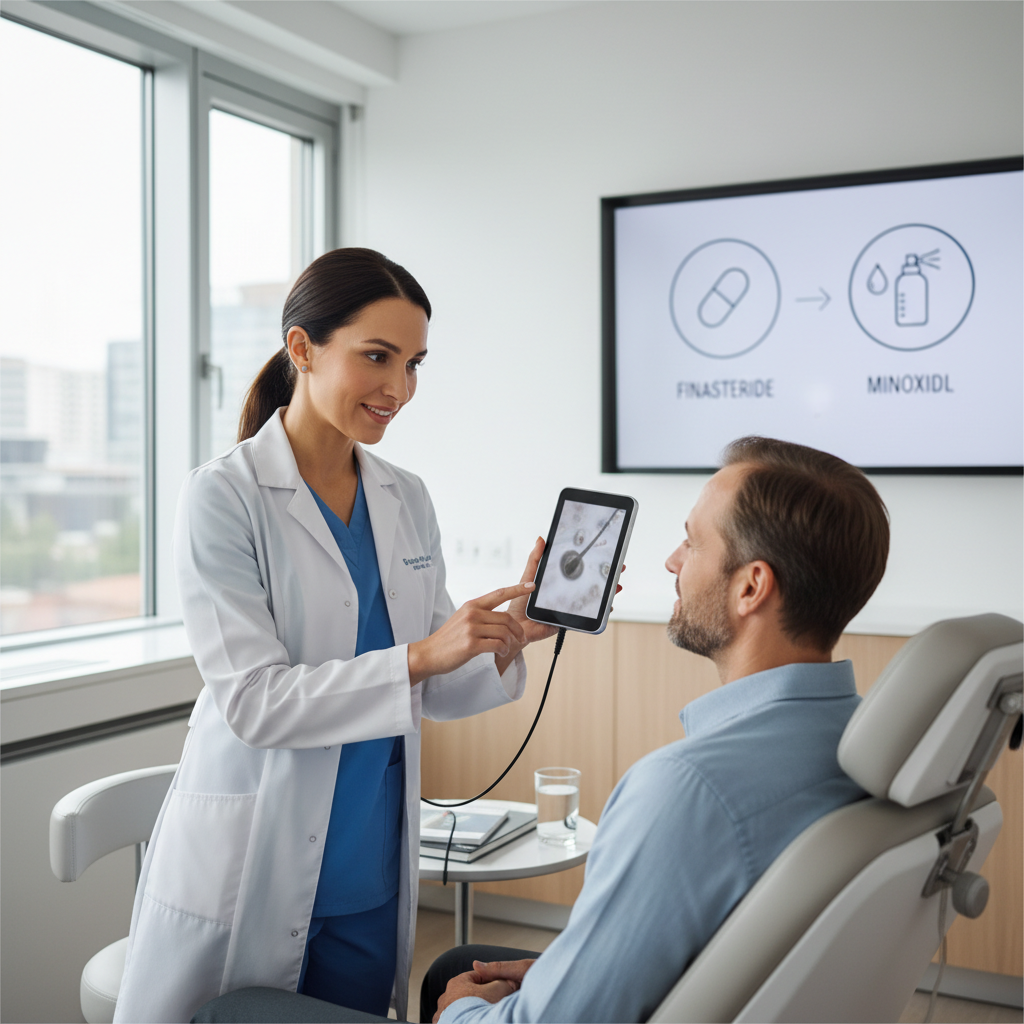
Once your TrueLabs results are in, our medical team will provide you with a detailed, easy-to-understand report. This report will highlight any abnormalities and explain their potential implications for your hair health. Our physicians will then discuss these findings with you, offering insights and recommending a personalized action plan.
This plan might involve dietary changes, specific supplement recommendations, prescription medications, or lifestyle modifications. The goal is always to address the underlying issue, not just mask the symptoms. For example, if low ferritin is identified, a physician might prescribe an iron supplement and monitor your levels over time. If a thyroid imbalance is found, appropriate thyroid medication can be prescribed and managed.
Beyond Blood Tests: A Holistic Approach
While a blood test hair loss cause analysis is foundational, we also recognize that hair health is multifactorial. Stress management, adequate sleep, a balanced diet, and gentle hair care practices all play a role. Our comprehensive approach considers all these elements, providing you with a holistic strategy for achieving optimal hair health.
Remember, early detection and intervention are key. The sooner you identify the root cause of your hair loss, the more effectively it can be managed, potentially preventing further progression and promoting regrowth.
Take Control of Your Hair Health Today
Don't let hair loss continue to impact your confidence and well-being. Take the first step towards understanding and addressing the root cause. With TrueLabs, you gain access to advanced at-home testing, expert physician review, and personalized treatment plans, all designed to help you regain healthy, vibrant hair.
Ready to uncover the blood test hair loss cause for your situation? Start your journey with TrueLabs today! [blocked]
Frequently Asked Questions
Question: How accurate are at-home blood tests for hair loss?
Answer: At-home blood tests from TrueLabs utilize the same laboratory facilities and diagnostic technologies as traditional clinics, ensuring high accuracy and reliability. The key difference is the convenience of sample collection. All samples are processed in CLIA-certified labs, and results are medically reviewed by a licensed physician to ensure clinical validity and appropriate interpretation.
Question: What is the turnaround time for TrueLabs hair loss blood test results?
Answer: Typically, you can expect to receive your detailed results and physician review within 5-7 business days after your sample reaches our lab. We prioritize efficiency without compromising the thoroughness of our analysis and medical review.
Question: Can TrueLabs prescribe medication for hair loss?
Answer: Yes, if your blood test results indicate a treatable underlying cause for your hair loss (e.g., thyroid imbalance, specific nutritional deficiencies requiring prescription-strength supplementation), our licensed providers can prescribe appropriate medication or supplements in all 50 states. All treatment decisions are made after a thorough medical review of your results and clinical history.
Question: Is my personal health information protected with TrueLabs?
Answer: Absolutely. TrueLabs adheres to the highest standards of patient privacy and data security, including HIPAA compliance. All your results are securely entered into your personal medical EHR (Electronic Health Record), ensuring confidentiality and responsible management of your health information.
Question: What if my blood tests don't reveal a clear cause for my hair loss?
Answer: While comprehensive blood testing often reveals underlying causes, sometimes hair loss can be multifactorial or require further specialized evaluation. If your initial tests don't provide a definitive answer, our physicians will discuss next steps, which may include recommending additional specialized tests, lifestyle modifications, or referring you to a dermatologist or endocrinologist for further assessment. Our goal is always to guide you towards a solution.