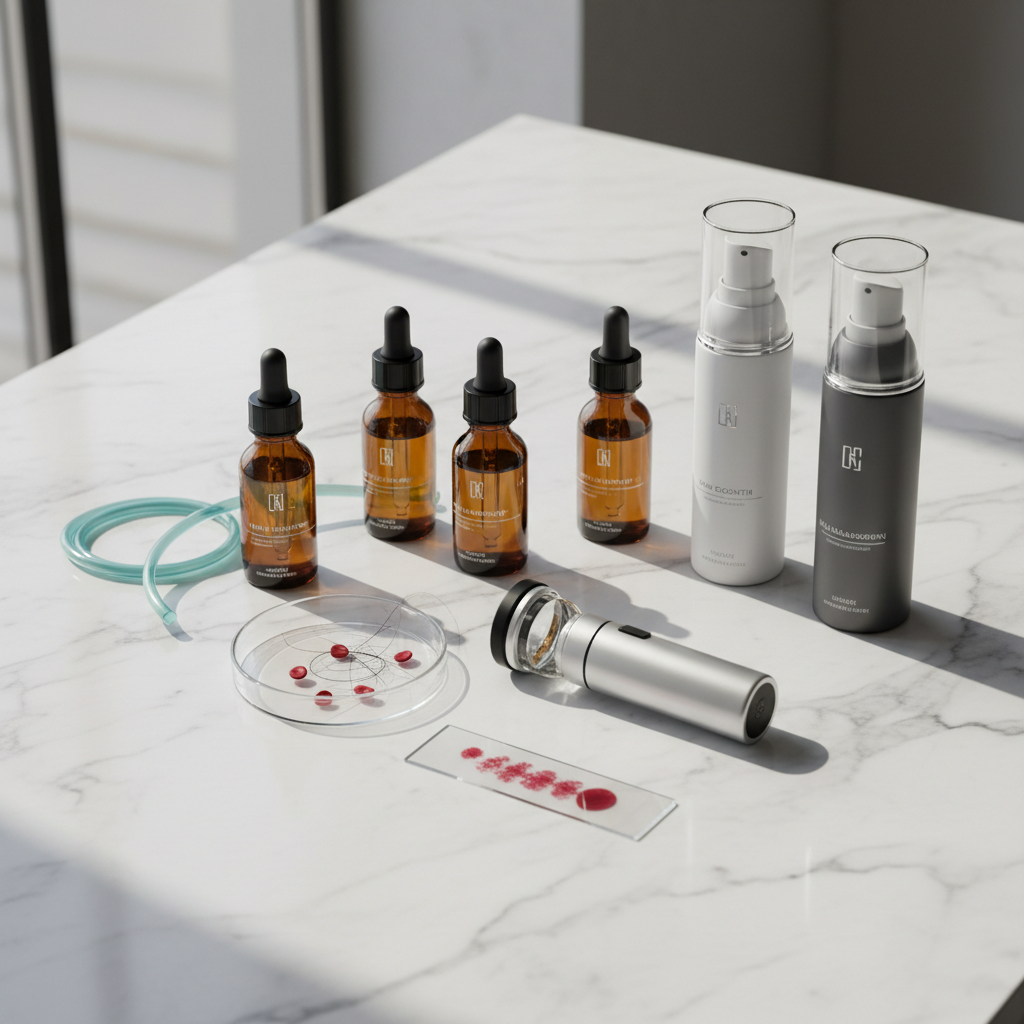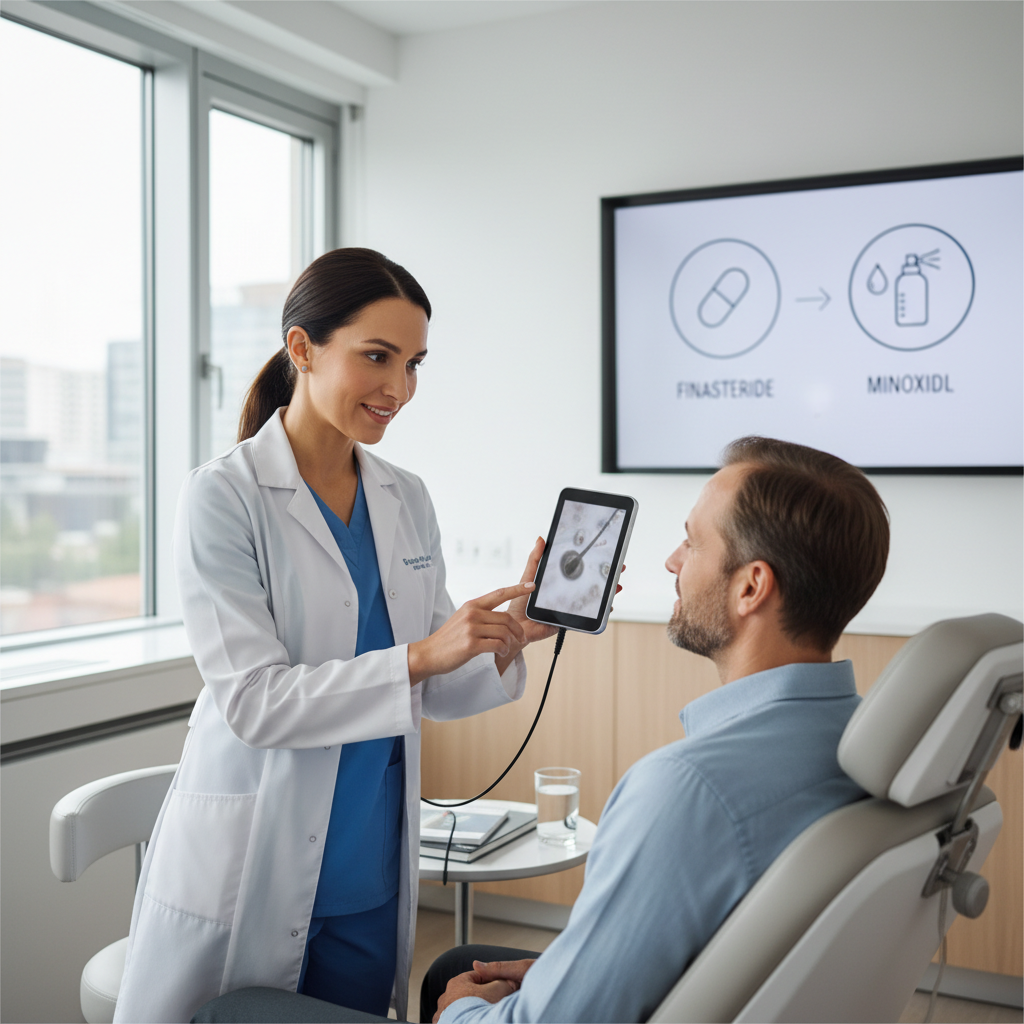
Hair loss can be a deeply distressing experience, impacting self-esteem and confidence for millions worldwide. If you're grappling with thinning hair or a receding hairline, you've likely encountered two prominent names in the fight against androgenetic alopecia: Finasteride and Minoxidil. But how do you decide which is right for you? At TrueLabs, we understand the complexities of hair loss and are here to provide clear, evidence-based guidance.
Key Takeaways
- Finasteride is an oral medication primarily for men, targeting the hormonal cause of hair loss by blocking DHT. It's highly effective at preventing further loss and promoting regrowth, but requires a prescription and has potential systemic side effects.
- Minoxidil is a topical treatment for both men and women, working by increasing blood flow to hair follicles and extending the growth phase. It's available over-the-counter and generally well-tolerated, but must be applied consistently.
- Combination therapy using both Finasteride and Minoxidil often yields superior results for men with androgenetic alopecia.
- Consulting a physician is crucial to determine the underlying cause of your hair loss and to create a personalized treatment plan, especially before starting prescription medications like Finasteride.
- TrueLabs offers comprehensive at-home testing and physician review to help you understand your unique hair loss profile and guide your treatment choices.
Understanding Androgenetic Alopecia: The Root Cause of Hair Loss
Before diving into specific treatments, it's essential to understand the primary culprit behind most cases of hair loss: androgenetic alopecia, commonly known as male-pattern or female-pattern baldness. This condition is genetic and hormonal.
In men, it's largely driven by dihydrotestosterone (DHT), a potent derivative of testosterone. DHT binds to receptors in genetically susceptible hair follicles, causing them to shrink, weaken, and eventually stop producing hair. This process is called miniaturization.
While the exact mechanism in women is less understood, hormonal fluctuations, genetics, and sensitivity to androgens also play a significant role, often leading to diffuse thinning rather than distinct bald patches.
Finasteride: Targeting the Hormonal Driver of Hair Loss
What is Finasteride?
Finasteride is an oral medication approved by the FDA for the treatment of androgenetic alopecia in men. It belongs to a class of drugs called 5-alpha-reductase inhibitors. Its primary mechanism of action is to block the enzyme 5-alpha-reductase, which is responsible for converting testosterone into DHT.
By reducing DHT levels in the scalp and throughout the body, Finasteride effectively targets the hormonal cause of hair loss. This leads to a decrease in hair follicle miniaturization, allowing follicles to recover and produce thicker, healthier hair.
How Finasteride Works
When you take Finasteride, it inhibits the 5-alpha-reductase enzyme, specifically type II and type III isoenzymes. This inhibition significantly lowers DHT concentrations in the scalp by up to 60-70% and in the bloodstream by approximately 70%. [Source: Journal of the American Academy of Dermatology, 1998; 39(4 Pt 1):578-89]. This reduction in DHT protects hair follicles from its damaging effects, slowing down hair loss and often stimulating new hair growth.
Efficacy and Results
Clinical studies have consistently demonstrated the effectiveness of Finasteride. A 5-year study showed that 90% of men taking Finasteride either maintained or increased their hair count, compared to 25% in the placebo group. [Source: Journal of the American Academy of Dermatology, 2002; 46(6):821-30]. Many users report visible improvements within 6-12 months of consistent use, with peak results typically seen after 1-2 years. It is particularly effective at preventing further hair loss and promoting regrowth on the crown and mid-scalp.
Potential Side Effects
While generally well-tolerated, Finasteride can have side effects, though they are often mild and reversible upon discontinuation. The most commonly reported side effects include:
- Decreased libido (affecting 1-2% of men)
- Erectile dysfunction (affecting 1-2% of men)
- Ejaculation disorders
- Breast tenderness or enlargement (gynecomastia)
Rarely, some men report persistent sexual side effects even after stopping the medication, a phenomenon sometimes referred to as Post-Finasteride Syndrome. However, the exact prevalence and mechanisms of this syndrome are still under active investigation and debate within the medical community. It's crucial to discuss these potential risks thoroughly with a licensed provider before starting treatment.
Who is Finasteride For?
Finasteride is primarily prescribed for men experiencing androgenetic alopecia. It is not approved for use in women, particularly those who are pregnant or may become pregnant, due to the risk of birth defects in male fetuses. For men, it's an excellent option for those looking to halt hair loss progression and stimulate regrowth, especially if their hair loss is predominantly driven by DHT.
Minoxidil: Boosting Follicle Health and Growth
What is Minoxidil?
Minoxidil is a topical solution or foam applied directly to the scalp. Unlike Finasteride, which is a systemic medication, Minoxidil works locally. It was originally developed as an oral medication for high blood pressure, but patients noticed an unexpected side effect: hair growth. This led to its reformulation as a topical treatment for hair loss.
How Minoxidil Works
The exact mechanism of Minoxidil is not fully understood, but it is believed to work by:
- Vasodilation: It widens blood vessels in the scalp, increasing blood flow to hair follicles. This delivers more oxygen, nutrients, and growth factors to the follicles, promoting their health and activity.
- Extending the Anagen Phase: Minoxidil may prolong the anagen (growth) phase of the hair cycle and shorten the telogen (resting) phase. This means more hairs are actively growing at any given time.
- Increasing Follicle Size: It can help miniaturized follicles to enlarge and produce thicker, longer hairs.
Efficacy and Results
Minoxidil has been shown to be effective for both men and women with androgenetic alopecia. Studies indicate that it can slow hair loss and promote regrowth, particularly on the crown. A 48-week study showed that 62% of men using 5% topical Minoxidil experienced a reduction in hair loss and an increase in non-vellus hair count. [Source: Journal of the American Academy of Dermatology, 2002; 47(3):377-85].
Results typically become noticeable after 3-6 months of consistent use, with maximum benefits seen around 12 months. It's important to note that Minoxidil requires continuous application; if discontinued, any new hair growth will likely be lost within a few months.
Potential Side Effects
Minoxidil is generally well-tolerated, with side effects usually localized to the scalp:
- Scalp irritation: Itching, dryness, flaking, or redness are the most common side effects.
- Unwanted facial hair growth (hypertrichosis): This can occur if the product drips onto the face or if the individual is particularly sensitive. It's more common with the 5% solution and in women.
- Initial shedding: Some users experience an initial increase in hair shedding during the first few weeks of treatment. This is often a sign that the medication is working, as old, weaker hairs are shed to make way for new, stronger ones.
Systemic side effects are rare but can include dizziness, rapid heartbeat, or swelling of the hands/feet, especially with higher concentrations or if absorbed excessively.
Who is Minoxidil For?
Minoxidil is suitable for both men and women experiencing androgenetic alopecia. It's an excellent over-the-counter option for those who prefer a topical treatment or are not candidates for Finasteride. It can be particularly effective for diffuse thinning and crown hair loss.
Finasteride vs. Minoxidil: A Direct Comparison
| Feature | Finasteride | Minoxidil |
|---|---|---|
| Mechanism | Blocks DHT production (hormonal) | Increases blood flow, extends growth phase (follicle health) |
| Form | Oral pill | Topical solution or foam |
| Primary Target | DHT-sensitive follicles (crown, mid-scalp) | Any hair follicle (diffuse thinning, crown) |
| Gender Use | Men only (contraindicated in women of childbearing age) | Men and women |
| Availability | Prescription only | Over-the-counter |
| Side Effects | Sexual side effects, gynecomastia (systemic) | Scalp irritation, unwanted facial hair (localized) |
| Onset of Results | 6-12 months | 3-6 months |
| Maintenance | Continuous use required | Continuous use required |
The Power of Combination Therapy
For many men, the most effective approach to treating androgenetic alopecia involves using both Finasteride and Minoxidil concurrently. These two treatments work through different mechanisms, offering a synergistic effect that can lead to superior results compared to using either alone.
- Finasteride tackles the internal, hormonal cause by reducing DHT.
- Minoxidil supports external follicle health by improving blood flow and extending the growth phase.
A study published in Dermatologic Therapy (2007; 20(4):279-87) found that the combination of Finasteride and Minoxidil was significantly more effective than either drug alone in improving hair growth and density in men with androgenetic alopecia. This combined approach offers a comprehensive attack on hair loss, addressing both the root cause and the local environment of the hair follicles.
Beyond Finasteride and Minoxidil: A Holistic Approach
While Finasteride and Minoxidil are cornerstones of hair loss treatment, they are not the only factors to consider. A holistic approach can significantly enhance results and overall hair health. At TrueLabs, we emphasize understanding the full picture of your health.
Nutritional Support
Deficiencies in certain vitamins and minerals can contribute to hair loss. Key nutrients for hair health include:
- Biotin: Essential for keratin production.
- Iron: Crucial for oxygen transport to hair follicles. Iron deficiency is a common cause of hair loss, especially in women. [Source: Journal of the American Academy of Dermatology, 2006; 54(5):824-8].
- Zinc: Plays a role in hair tissue growth and repair.
- Vitamin D: Important for hair follicle cycling.
- Protein: Hair is primarily made of protein, so adequate intake is vital.
Our comprehensive at-home lab testing [blocked] can identify potential nutritional deficiencies that might be impacting your hair health, allowing for targeted supplementation.
Lifestyle Factors
- Stress Management: Chronic stress can push hair follicles into a resting phase, leading to increased shedding (telogen effluvium). Techniques like meditation, yoga, and regular exercise can help.
- Healthy Diet: A balanced diet rich in fruits, vegetables, lean proteins, and healthy fats supports overall health, including hair growth.
- Scalp Health: Gentle hair care practices, avoiding harsh chemicals, and maintaining a clean scalp environment are important.
Emerging Therapies
Research continues to explore new avenues for hair loss treatment, including platelet-rich plasma (PRP) therapy, low-level laser therapy (LLLT), and various topical peptides. While promising, many of these still require more robust clinical evidence to establish their long-term efficacy and safety. We stay abreast of the latest scientific advancements to ensure we offer the most effective, evidence-based solutions.
Making Your Decision: A Physician-Guided Journey
Deciding between Finasteride, Minoxidil, or a combination, requires a personalized approach. Your age, gender, type and extent of hair loss, medical history, and personal preferences all play a critical role. This is where TrueLabs excels.
We believe that effective hair loss treatment begins with accurate diagnosis and personalized care, all medically reviewed by a licensed physician [blocked]. Our process is designed to empower you with knowledge and provide access to physician-prescribed treatments from the comfort of your home.
- Comprehensive At-Home Testing: We offer advanced at-home lab testing with 542 biomarkers, going beyond just basic markers to provide a holistic view of your health. This can include hormonal panels, nutritional status, and inflammatory markers that might contribute to hair loss. Our AI-powered analysis helps pinpoint potential underlying issues.
- Physician Review and EHR Integration: Every single test result and health profile is reviewed by our board-certified physicians. All results are entered into your personal medical EHR, ensuring a continuous, integrated record of your health journey. TrueLabs is a physician-led medical group, not just a lab company, meaning your care is always overseen by licensed professionals.
- Personalized Treatment Plans: Based on your unique lab results and medical history, our licensed providers will discuss your options, including whether Finasteride, Minoxidil, or a combination therapy is most appropriate for you. Treatment is prescribed by licensed providers in all 50 states, ensuring you receive safe and effective care.
Don't let hair loss dictate your confidence. Take the first step towards understanding and addressing your hair loss effectively. With TrueLabs, you gain a partner in your health, providing physician-backed insights and personalized treatment plans.
Frequently Asked Questions
Q: Can women use Finasteride for hair loss?
A: Finasteride is generally not recommended for women, especially those who are pregnant or may become pregnant, due to the risk of birth defects in male fetuses. While some postmenopausal women may be prescribed Finasteride off-label under strict medical supervision, Minoxidil is typically the first-line pharmaceutical treatment for female pattern hair loss.
Q: How long does it take to see results from Finasteride or Minoxidil?
A: For Finasteride, visible results typically begin around 6-12 months, with peak effectiveness often seen after 1-2 years of consistent use. For Minoxidil, results can be noticed sooner, usually within 3-6 months, with maximum benefits around 12 months. Both treatments require continuous use to maintain results.
Q: What happens if I stop using Finasteride or Minoxidil?
A: If you stop using Finasteride, DHT levels will return to their previous state, and any hair gained or preserved will likely be lost within 6-12 months. Similarly, if you stop Minoxidil, the new hair growth will shed, and your hair loss will revert to its previous pattern within a few months. Both treatments are lifelong commitments for sustained results.
Q: Are there any side effects of Finasteride or Minoxidil that I should be seriously concerned about?
A: While most side effects are mild, it's important to be aware. For Finasteride, rare but serious concerns include persistent sexual side effects (Post-Finasteride Syndrome, though its prevalence is debated) and mood changes. For Minoxidil, severe scalp irritation, or systemic effects like rapid heartbeat or dizziness, should prompt immediate medical attention. Always discuss all potential risks and benefits with your TrueLabs physician.
Q: Can I use Finasteride and Minoxidil together?
A: Yes, for men with androgenetic alopecia, using Finasteride and Minoxidil together is a common and often highly effective strategy. They work through different mechanisms, providing a synergistic effect that can lead to better hair growth and density than either treatment used alone. Your TrueLabs physician can guide you on the best combination therapy for your specific needs.
Ready to take control of your hair health?
Discover your personalized path to healthier hair with TrueLabs. Our physician-led approach, comprehensive at-home testing, and tailored treatment plans are designed to give you the clarity and care you deserve. Start your journey today! [blocked]